


Gris - A touching journey and a visual treat

First Played: December 2021. Total Playtime: 13 hours

Gris is a puzzle platformer heavily focussed on its amazing visuals where every frame looks like a piece of art. The mechanics and level design support art. The game does an amazing job guiding players throughout ensuring most time spent is enjoying the journey.
Narrative:
The story is one of the key pillars in the game, a girl's journey through grief (after losing someone close to her, avoiding details in case of spoilers) represented very well through the colours in the game. They used the Kubler-Ross model for the stages of grief and compared each stage to a colour. The game starts with no colour and each stage of the grief model adds a colour to the game.

No colour (at start): Despair

Red- Anger

Green- Bargaining

Blue- Sadness

Black- Depression (the enemy shown as a black bird/monster)
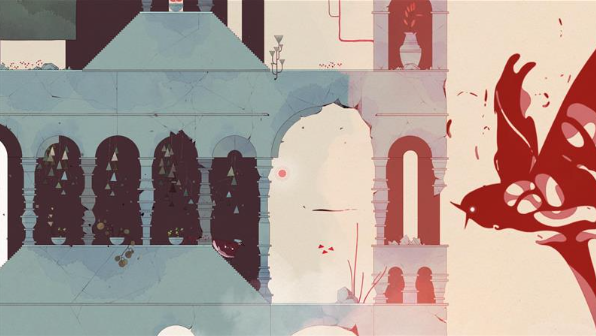
Yellow- Hope & Recovery

Level Design:
The same colour model is very well reflected through the levels. The Red area (Anger) has violent winds knocking the player. Green area (bargaining) has the player learn to coordinate with another NPC in the game (controlling it via offering fruits). Blue area being wet and submerged underwater level.
Overall, it made the game constantly feel unique and engaging...as soon as I learnt and mastered the flow of a level, they would slowly transition into a new area!
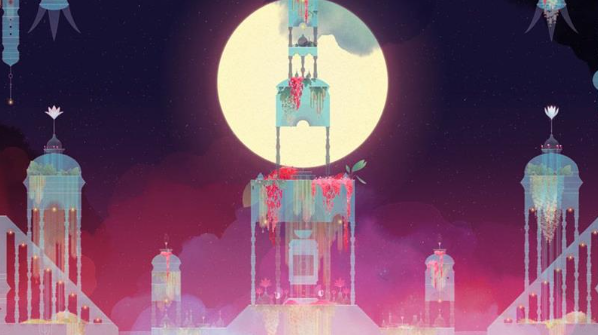
The Levels were made in a way that I had to learn to trust the game, that it will lead me to the correct area.
The Game was never punishing in terms of bad gameplay. If I failed the jump, the game would always have a safety net to catch me and let me reattempt the challenge again. The puzzles were novel and made me think, but not too complicated or requiring heavy amounts of backtracking. It was at the same level of Monument valley, casual but not kiddish (which I really appreciated).
Mechanics:
Following the same model of Grief, even the mechanics taught to me followed the same model. In the Red area, the character learns the down slam, used to destroy weak blocks below the player. This fits very well with the anger theme. The mechanics never added any complicated controls. The game only gave me 2 extra buttons (other than standard locomotion) for down dash and singing. Most of the powerups received through the game were just used to enhance and empower the existing locomotion mechanics, except the singing powerup which felt a bit disconnected, but it completely compensated for this disconnect by making the singing mechanic really positive. The player can bring the world back to life (done very beautifully) by singing near certain elements.
Even the jump was designed to feel “hopeful”.The character jump is more vertical than horizontal, so it always feels like I’m trying to jump into the sky. The hang time in the air is very forgiving and gave me enough time to rethink my actions mid-jump, but it still feels fun and in no way too easy.
Stray Thoughts:
I was reading up on the game's development journey and one step stood out. They assigned the Lead artist for the project as the Creative Director to ensure that Art remains a priority in the game. This was a great approach (in their case), as every frame feels like an amazing piece of artwork and even the mechanics and level design constantly try to follow this approach of "form over function"
The game makes the most effort to look amazing and the mechanics, level design do their best to enhance the aesthetics of the game.

Comments