


Divinity Original Sin 2: A love letter to TTRPG players.

First played: October 2022. Total Playtime: 138 hours

Divinity Original Sin 2 (DOS2) felt like a love letter dedicated to TTRPG players. The game is a solo/co-op turn based combat adventure in the fantastical realm of Rivellon. The players journey through 4 islands in a 4 act structure navigating through an interesting albeit complicated plotline. Although the game is not procedural (hand-crafted content), the amount of freedom presented to player characters is rich enough to easily satiate multiple campaigns without getting bored.
It took me around 130 hours to complete the game playing with a full party as a co-op experience. The game does hold up pretty well for a single player experience as well.
NARRATIVE:
The players can choose from a small roster of origin characters (premade) or make a custom character of their own. Origin characters have a deeply rooted story tied to the world very well. Custom characters are definitely not ignored and have their own adventure linked very well into the plotline. In any case, player characters start as prisoners captured because of their ability to use powerful magic known as Source.
Some key moments where the narrative is woven very well into the gameplay:
Tutorial stage, first fight with all origin characters serves as a nice introduction to all origin character skill sets to help players decide who they may recruit in future.
Driftwood island gives complete freedom to players for completing the quest (obtain 3 source points) as the end of many side quests leads them to gain a source point.
All throughout the game a final battle between the main characters is foreshadowed.
The game is broken into a 4 act structure each involving an island the players travel to:
ACT 0: Tutorial
The game gives a beautiful tutorial wrapped within the game, plot and character introductions in the ship carrying the players to the prison as captives.

ACT 1: FortJoy
This island is majorly composed of the prison where the players are held captive. They find a way to escape and on the way discover all major plot seeds which will soon mature in later acts. They also discover how they are the chosen one due to the Source within.

ACT 2: Driftwood
This island is where players are tasked with mastering the Source power as the main objective. Players can then explore and discover many quests and missions that adds depth to the world and still end up progressing with the main quest (well designed, although it can break the immersion when you already have enough source training and then the final reward for a quest is another source point that you cannot absorb).

ACT 3: The Nameless Isle
This act is relatively smaller compared to the last two and focuses on the player's journey to rise up and become the new Godwoken (the chosen one). Involves a lot of unskippable combat as the whole island is in the middle of a war between two factions. If the player character is custom-made, this act focuses on their relationship with the gods and a nice climax to this arc.
I definitely commend the game on how much care they put into making any custom character feel as much a part of this world as an origin character (the only time it was bad for me was the end credits epilogue where the depiction used for custom characters were all quite generic and repetitive).
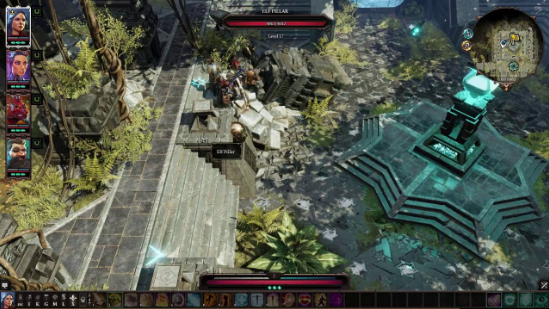
ACT 4: Arx
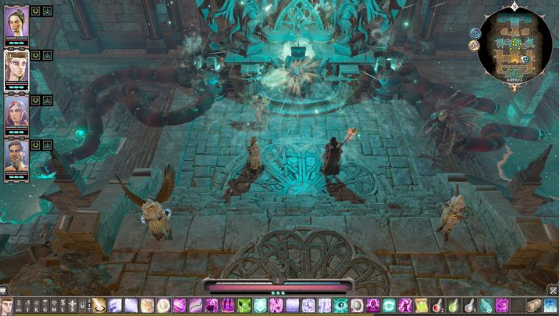
The final arc of the game focussing on the players chasing the BBEG and inevitably getting into the final fight (which was pretty fu**ing hard!). The act is a culmination of many origin character’s finale and it's very satisfying indeed. The final boss fight also proposes a twist mid-battle which just left me amazed!
LEVEL DESIGN:
The map is huge and it was a surprise for me to discover that it's all hand-crafted content. Although the traversal can be confusing at times (especially early game), the game tries its best to guide the players towards the next eventful area. The level design was a bit hard for me at first to grasp but it fits for the type of game they aimed for. The world is huge. Often it is easy enough to tell areas where a possible combat may occur because of the layout so keen eyed players can just observe to predict a future combat area, which might be nice for some but not for other kinds of players.
Overall I would say that the game world is full of content and the world/level building is very vivid and pleasant as much as its enjoyable!

MECHANICS:
There are so many mechanics in the game that this article cannot do justice to it. This magnitude is one of the major reasons why the game is so fun and provides such rich freedom, however it is also the biggest deterrent for most players to abandon playing DOS2.
Some notable gameplay mechanics for me:
1. Player Stat management: The game does a great job of emulating a very TRPG-ish approach to character stats. The stats are divided into-
- Combat attributes like strength, constitution etc for damage, health and so on.These also serve as a lock for equipments (high level shields can only be equipped by players with a required level and constitution for example).
- Combat abilities determine a character’s expertise in a certain form of combat and also for learning skills from it. For example, investing points in Pyrothurge will grant players extra damage when casting fire spells and allow them to learn spells from that school of magic.- Civil abilities make certain out of combat interactions easier. These include things like sneaking, bartering, persuasion (my favourite) etc,.
- Talents are extra passive abilities that give more buffs to the characters and add another element of building your own personalised spec for the character.

2. Character specialisation variety:
A staple feature in this genre, nonetheless something I thoroughly enjoyed. The ability to freely customise the type of character you build and grow as. You can be a mage of a specific element (or many), a polymorph transforming into animals or a standard knight (and many more). The game allows complete freedom to respec your playstyle whenever you want, given that they have the required skill books (can be found throughout the world).

This also adds another layer of strategy as players decide which talents and stats to level up, which equipment and skills to keep so as to achieve their desired goal.
I, for example, went for a tanky warrior polymorph and ended up with 10k+ HP at the end of the game. All my decisions were about maxing out my HP and being the team’s shield.
3. Dynamic Elemental Interaction:
The game full of magic unsurprisingly has many elements and elemental effects. Players and enemy characters can channel these elements during battle via spells or items. Elements may leave residue on the battlefield in the form of puddles, smokes etc,. These elemental residues have a great degree of combinations when interacting/mixing.
For example: Blessing a residual fire will cause it to become blessed fire which heals players instead of damaging them.

COMBAT:
The combat is turn based and consumes action points (AP) for movement, using items or skills. This is a standard system very similar to classic TTRPG.

STRAY THOUGHTS:
Although the game had a huge entry barrier for players like me due to its intricate systems and less player friendly UI, I am glad I stuck through (mostly because I had a friend pushing me to play) because as I started to learn the inner workings of the game systems I was awestruck on how much freedom it provides me and the amount of fun each exploration, battle, interaction or simple strolling about can bring to me.

Comments